Cat vaccination schedule: age, boosters, and costs
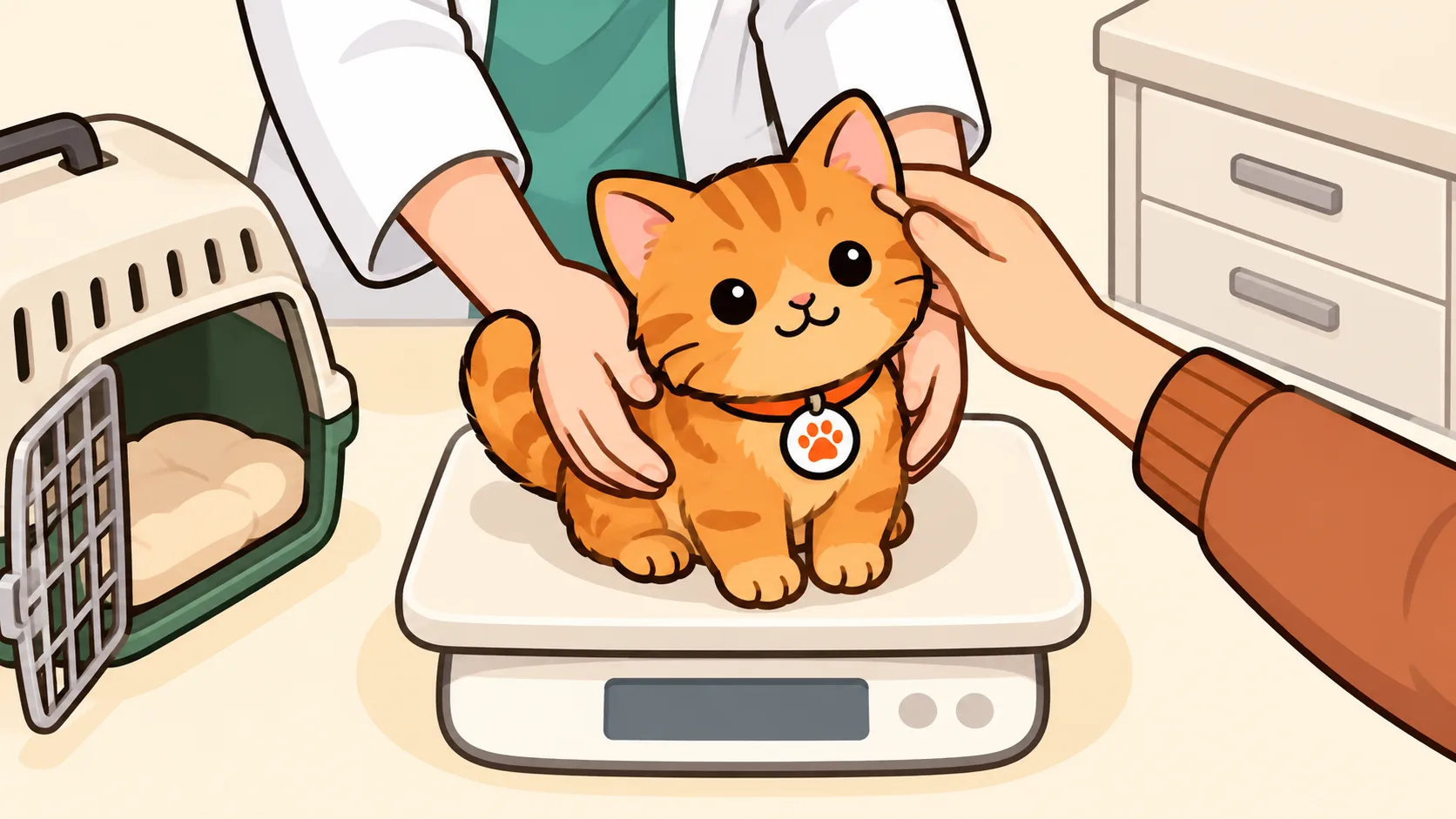
To plan your cat’s vaccinations, start with age milestones, then note the due dates for each vaccine your cat receives.
A kitten’s first vaccinations come around quickly. Between shots, boosters, and the cost to plan for, it’s easy to lose track. To plan your cat’s vaccinations, start with age milestones, then note the due dates for each vaccine your cat receives.
Key takeaways
- The first shot can be given as early as 8 weeks; the next is generally scheduled 3 to 4 weeks later.
- Vaccines target feline panleukopenia and the viruses associated with feline upper respiratory disease, among other illnesses.
- To travel in the European Union, a cat must be up to date on its rabies vaccination.
- After the first booster, the interval varies according to the vaccine and the risk of exposure.
- Published prices for a vaccination visit range from €70 to €140.
When should kittens get vaccinated under the recommended schedule?
The first shot against feline panleukopenia, rhinotracheitis, and calicivirus infection can be given as early as 8 weeks. These general guidelines are adjusted for each cat based on its age, lifestyle, and health.
The first two shots, starting at 8 weeks
| Age or interval | What’s scheduled | Details |
|---|---|---|
| From 8 weeks | First shot can be given | It may be delayed until 12 weeks if high levels of maternal antibodies are expected, according to the European vaccine information leaflet. |
| 3 to 4 weeks after the first shot, at around 12 weeks | Second shot in the initial vaccination series | This interval is generally scheduled when the series begins at 8 weeks, according to the Anses document. |
Read also: How Many Times a Day Should a Cat Eat? Age and Diet
Which diseases does vaccination protect cats against?
The first shots target feline panleukopenia and viruses linked to feline upper respiratory disease, among other illnesses. These names refer to different diseases, and distinguishing them helps explain the vaccines offered.
Feline panleukopenia: an uncertain prognosis
Feline panleukopenia, also called feline distemper, is caused by feline parvovirus. Its prognosis is uncertain: the outcome of the disease cannot be predicted. It is one of the infections targeted by kitten vaccinations.
Feline upper respiratory disease: viruses involved
Feline upper respiratory disease is associated with herpesvirus and calicivirus, among other pathogens, as explained in this study of feline upper respiratory disease. Rhinotracheitis and calicivirus infection are among the diseases targeted by the first shots.
What vaccinations does a cat need for travel?
For noncommercial travel within the European Union from France, a cat must be identified, have a European pet passport, and be up to date on its rabies vaccination.
Rabies and travel within the European Union
The first rabies vaccination can be given from 12 weeks of age, after identification. It becomes valid 21 days after this first shot. Identification is done with a microchip, unless the cat was tattooed before July 3, 2011. Check these dates before setting a departure date.
When to get your cat vaccinated and schedule boosters
The first booster follows the initial vaccination series. Later boosters do not necessarily follow the same schedule: the interval depends on the vaccine used and the cat’s risk of exposure.
The first booster after the initial vaccination series
For the Leucofeligen vaccine, which includes a component against feline leukemia (FeLV), the first booster is scheduled one year after the initial vaccination series. The date that series was completed is therefore the starting point for recording the next due date.
How often later boosters are needed
After this first booster, the interval between two boosters can range from 1 to 3 years, depending on the vaccine and the risk of exposure. Write down the name of the vaccine given and the date of the next booster in your cat’s health record: an annual schedule does not apply in every case.
How much does cat vaccination cost?
Based on veterinary clinics’ published price lists, expect to pay €70 to €140 for a cat vaccination visit.
The cost of a visit with a vaccine
To plan for the expense, count the visits on your cat’s schedule, then check the price charged for each one. The number of visits depends on the shots and boosters selected for your cat.
How to keep your cat’s vaccination schedule up to date
To keep the schedule up to date, record each shot and the next due date in your cat’s health record. Keep track of the kitten’s first two shots, followed by boosters, whose frequency varies by vaccine. Tip: write down the date of the next appointment during the visit, next to the name of the vaccine given.
Papatte lets you keep a record of past care and schedule reminders for your pet. .
Read also: How Long Does a Cat Stay in Heat? Care and Tracking
Frequently asked questions
Yes, vaccination is preferable, even if the cat never goes outside or meets other cats. Vaccination aims to protect against serious infectious diseases. The vaccines to consider depend on the cat’s lifestyle and health.
A vaccination visit can help determine which vaccines to consider for an adult cat that has never been vaccinated. The cat’s age and the vaccines selected will guide the schedule for future doses, which can then be recorded in its health record.
Find the date of the last vaccination in your cat’s health record and schedule a visit. Have the name of the vaccine handy as well: booster due dates vary according to the product used and the cat’s risk of exposure.
No, boosters are not necessarily annual: after the first booster, the interval can range from 1 to 3 years. The vaccine given and the cat’s risk of exposure determine the next due date to record in its health record.