Normal Dog Temperature: Range, Measurement, and Warning Signs
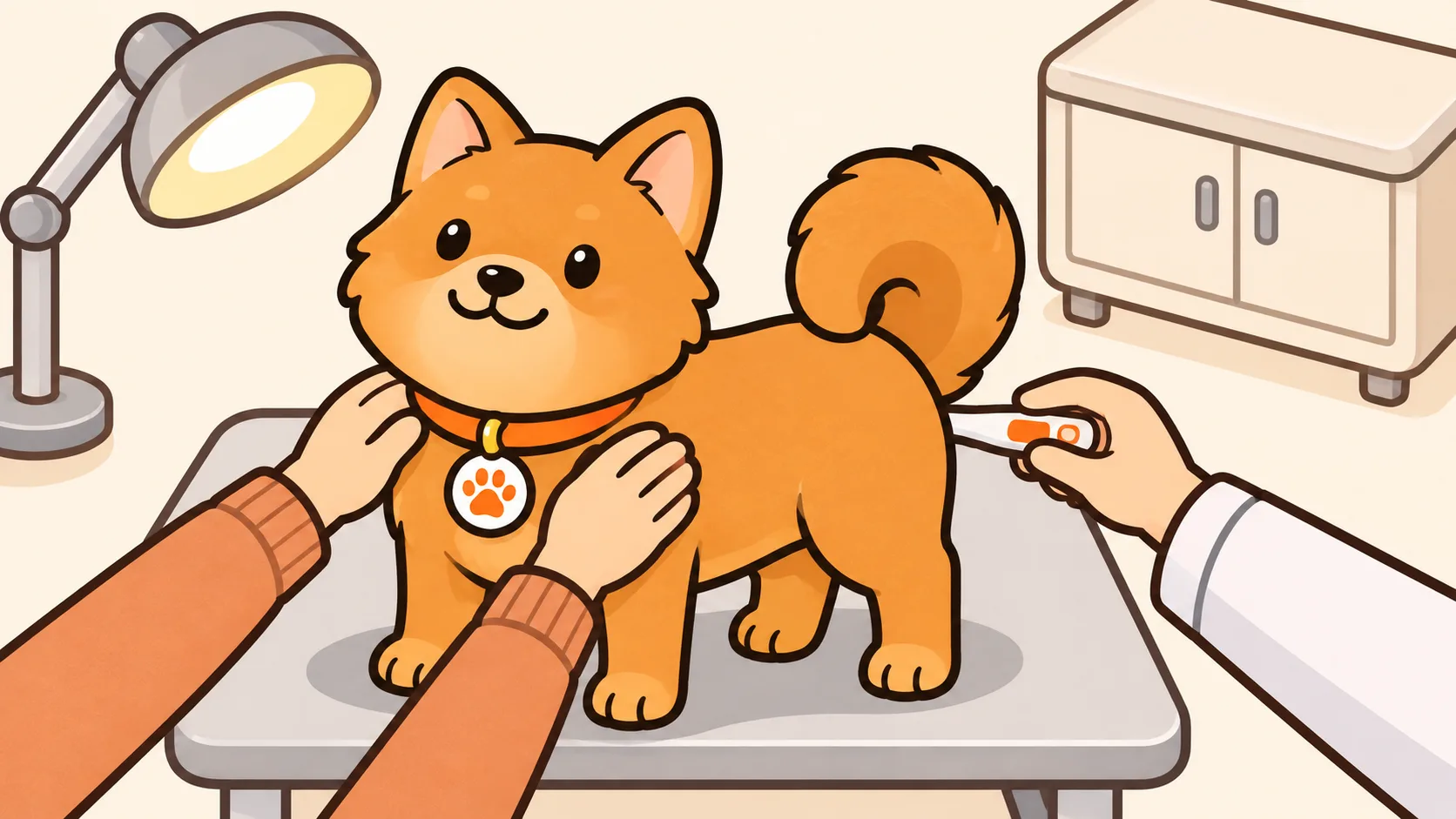
An adult dog's normal temperature is 38 to 39.5 °C, higher than a human's. A puppy's temperature is also less stable.
An adult dog's normal temperature is between 38 and 39.5 °C, higher than a human's. It rises a little after a meal or a strong emotion, and considerably after intense exercise. It is also less stable in puppies. An abnormal reading is more concerning if your dog is listless, panting heavily, or trembling.
Key takeaways
- Normal range: 38 to 39.5 °C in adults; puppies approach this range at around 4 weeks.
- How to measure it: Use a lubricated digital thermometer rectally while your dog is at rest.
- Over 40 °C: Call a veterinarian; if it is hot or your dog has been exercising, start cooling your dog right away.
- Under 37 °C: Seek veterinary care promptly, especially if your dog is tired or has stopped eating.
- Never give paracetamol or any other human medication for a fever.
What is a normal dog temperature at different ages?
The reference values above apply to adult dogs. A reading of 39.2 °C in a healthy dog is therefore not a fever.
Puppies have trouble regulating their temperature during their first weeks: they depend on warmth from their mother, littermates, and bedding. In the first few days, a puppy's temperature is normally lower than an adult dog's, and it reaches adult levels at around 4 weeks. Before that age, a puppy that feels cold, does not nurse, or stays apart from the litter needs to be seen right away. In the meantime, warm the puppy gradually against your body or in a blanket. Do not feed the puppy while it is cold.
Good to know: A warm, dry nose tells you nothing about your dog's temperature. Only a thermometer can give you the answer.
How do you take your dog's temperature?
Use a digital thermometer reserved for your dog, and have a second person help by holding your dog in a standing position and talking to it.
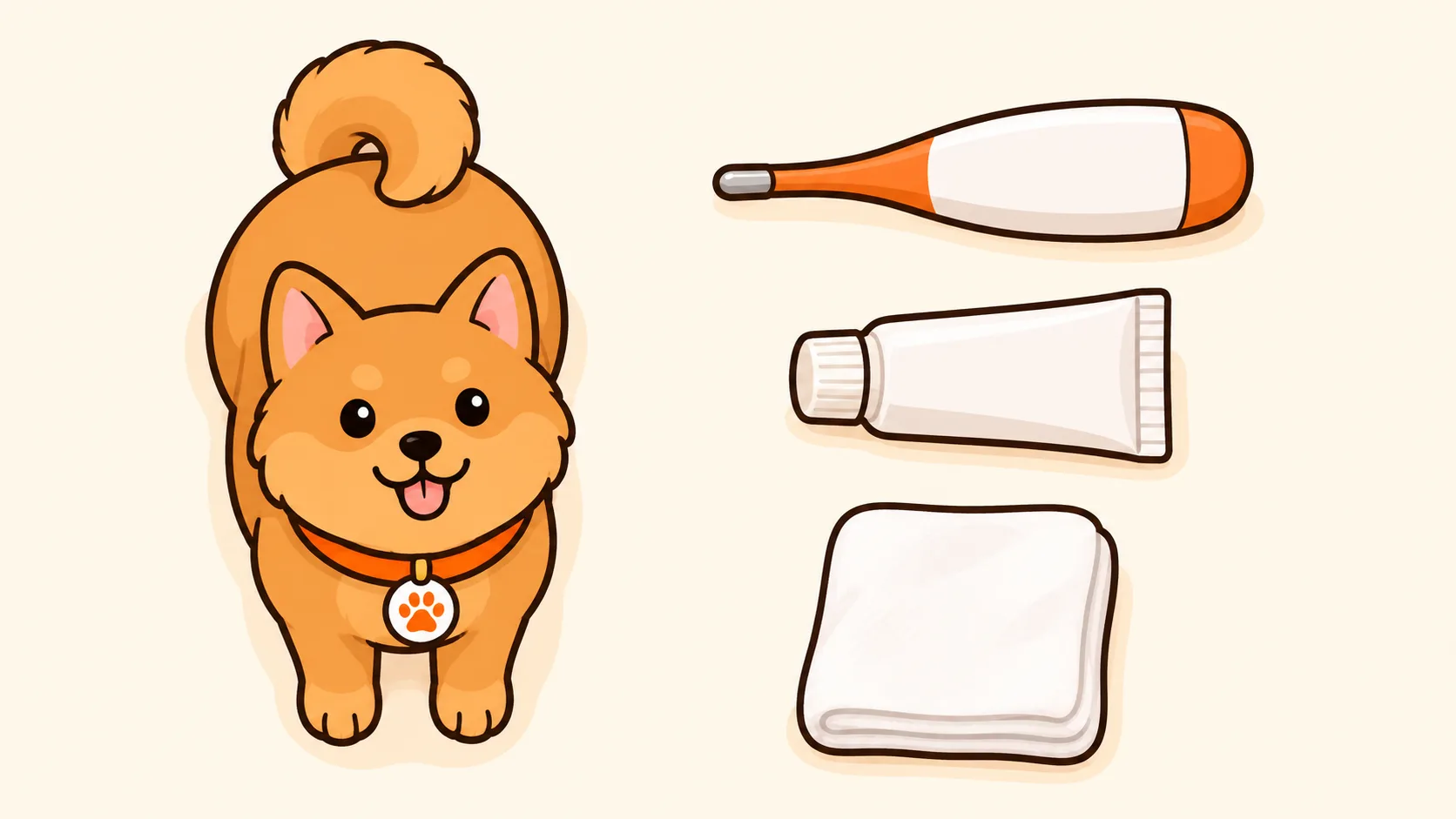
- Lubricate the tip with petroleum jelly or lubricating gel.
- Lift the tail and gently insert the tip into the anus, about 1 cm for a small dog and 2 to 3 cm for a large dog, angling it slightly to the side.
- Wait for the beep, remove the thermometer, read the result, then clean it with alcohol.
Take the measurement when your dog is calm, after at least 30 minutes of rest: exercise raises body temperature for a while, and a reading taken just after a run will be falsely high. If in doubt, take the temperature again a little later, while your dog is still at rest.
What should you do if your dog's temperature is too high or too low?
Always consider the reading alongside your dog's overall condition. A slightly abnormal reading in an alert dog that is eating does not mean the same thing as that reading in a dog that is barely moving.

High temperature: exercise, fever, or heatstroke?
A fever is different from heatstroke. During a fever, the body deliberately raises its “thermostat” to fight an infection or inflammation. With heatstroke, external heat overwhelms that thermostat: dogs sweat very little and release heat mainly by panting, which is no longer enough in a closed car, in direct sunlight, or after exercise in hot weather. Short-nosed breeds (bulldogs and pugs) and overweight dogs are most at risk.
Heatstroke is a medical emergency. Heavy panting and a bright red tongue are warning signs. Vomiting, diarrhea that is sometimes bloody, a staggering gait, or collapse are signs of a serious condition.
Emergency: If your dog is panting heavily, restless, or growing weak in hot weather or after exercise, especially above 40 °C, call a veterinarian immediately and start cooling your dog right away. Move your dog into the shade and a breeze, and wet it with cool water, but not ice-cold water. If you use wet cloths, replace them often and do not cover your dog completely, because a cloth that warms up traps heat. Offer water without forcing your dog to drink. Avoid ice and ice-cold water: they constrict blood vessels in the skin and can slow the release of heat. Stop cooling at around 39.5 °C to avoid causing hypothermia. Have your dog examined even if it seems to recover, because complications affecting the kidneys or blood clotting can appear in the following hours.
Never give paracetamol: although intended for humans, it causes poisoning in dogs. Ibuprofen is just as dangerous. For a fever, the veterinarian first looks for the cause by examining your dog, often with a blood test, then prescribes treatment suited to dogs.
Low temperature: signs to watch for
A temperature that is too low comes with trembling, slow movements, and extreme fatigue. Puppies, small short-haired dogs, older dogs, and dogs that have stayed wet in the cold are most affected. Hypothermia can also occur after anesthesia or in cases of shock. Dry your dog, wrap it in a blanket, and move it to a heated room. Warm your dog gradually, without placing a hot heat source directly against its skin. Seek veterinary care promptly, and immediately if your dog is very listless, can no longer stand, or barely responds.
| Sign | Heatstroke | Temperature too low |
|---|---|---|
| Thermometer | Over 40 °C | Under 37 °C |
| Breathing | Heavy panting | Slow, calm |
| Tongue and gums | Bright red | Pale |
| Behavior | Restlessness, then weakness | Trembling, listlessness |
| First step | Cool water, shade, breeze | Dry, cover, warm up |
What to do about an unusual reading
- Take the temperature again when your dog is calm, after some rest.
- Write down the reading, time, and symptoms: appetite, breathing, tongue color, and trembling.
- Call the veterinarian if the abnormal reading persists or your dog seems ill, even if the reading is borderline.
To keep these readings and your dog's health history in one place and show them to the veterinarian, you can use the Papatte app.
Frequently asked questions
Yes. A standard digital thermometer is suitable, as long as you reserve it for your dog afterward for hygiene reasons. Choose one with a flexible tip and a quick reading: your dog is less likely to move if the measurement takes less time. Avoid glass thermometers, which can break and sometimes contain mercury.
Yes, sometimes. A slight temperature increase, along with some tiredness, may appear within 24 to 48 hours after vaccination: this is the immune system's normal response. If it lasts longer, call the veterinarian. If your dog's face swells, it vomits, or it has trouble breathing, call right away, as this could be an allergic reaction.
Because her temperature drops by about 1 °C just before labor. When this drop is confirmed by two readings, labor generally begins within 24 hours. Take her temperature twice a day at a set time during the last week of pregnancy.
Rarely. A fever is almost always accompanied by listlessness, a reduced appetite, or a desire to be alone. An alert dog that plays and eats, with a reading of 39.6 °C taken after a walk, is often simply warm: check again at rest before worrying.