Should You Cut Your Cat's Nails? When and How
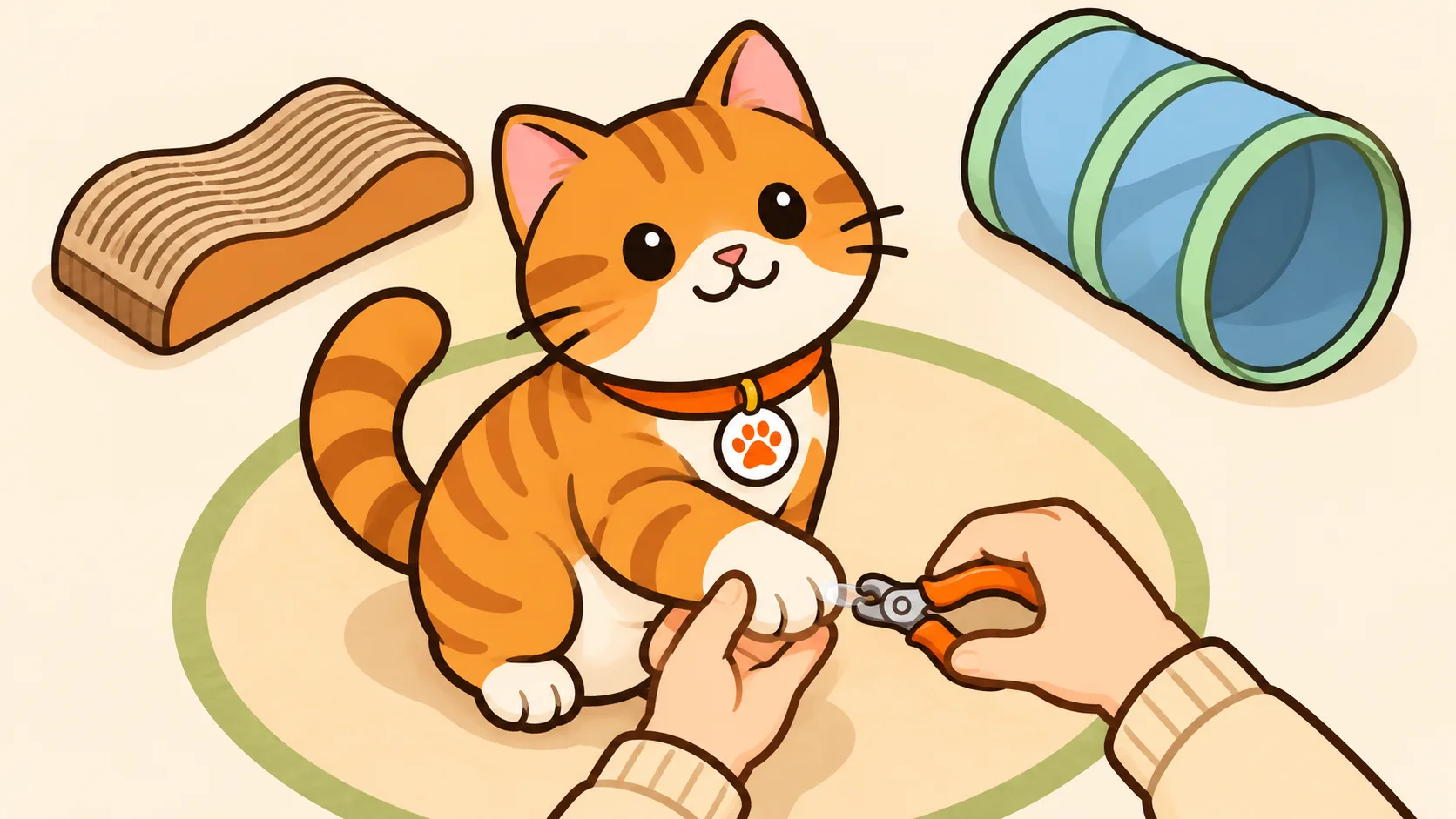
Should you cut your cat's nails? Watch for a nail that curls toward the paw pad, a sign that it may need trimming.
Should you cut your cat's nails? Not necessarily: every cat does not need a trim. A cat that goes outdoors and climbs generally wears down its nails on its own. An indoor cat or an older, less active cat may need them trimmed. Watch for a nail that curls toward the paw pad.
Key takeaways
- Trim a nail only if it is too long: it snags on fabric or curls toward the paw pad.
- Check the dewclaws on the front paws separately because they do not touch the ground.
- Trim only the translucent tip, and never cut the pink quick.
- A nail embedded in the paw pad requires a veterinary visit that day.
- A scratching post supports your cat's natural behavior. It does not replace trimming when a nail needs it.
Which cats need their nails trimmed?
Whether a cat needs a trim depends on its lifestyle and age; there is no rule for every cat.
What are a cat's nails for?
Cats use their nails to climb, grip, hunt, and defend themselves. An outdoor cat's nails are its main means of defense. Do not shorten them without a reason if your cat goes outdoors.
Outdoor cats, indoor cats, and older cats
| Cat | Nail wear | Should you trim them? |
|---|---|---|
| Outdoor cat | Worn down by trees, the ground, and climbing | Rarely, except for dewclaws |
| Active indoor cat | Slower wear | Sometimes, if a nail snags on everything |
| Older, less active cat | Little wear: climbs and scratches less | Often, because the nails grow longer and curl |
| Polydactyl cat (extra toes) | Extra nails do not wear down well | Check closely |
Kittens wear down their nails while playing. For them, trimming is mainly a way to get them used to having their paws handled early.
An older cat that stops scratching or climbing often has arthritis: tell your veterinarian, who may suggest pain treatment.
How can you tell if your cat's nails are too long, and what are the risks?
A nail is too long if it regularly snags on the couch or clothing, if your cat's nails click on tile as it walks, or if a tip curls inward. Check all four paws once a month. Check more often if your cat is older.

A tip that curls toward the paw pad
As a nail grows, it curls back on itself and may eventually dig into the paw pad. The wound is painful: the cat limps, licks its paw, and will not let anyone touch it. The wound may then become infected.
Urgent: If a nail has dug into the paw pad, do not pull it out. Have a veterinarian examine your cat that day. The veterinarian trims the nail, removes the embedded tip, and disinfects the wound. If the wound is infected, the veterinarian prescribes treatment.
A swollen toe, a broken nail, or discharge at the base of a nail also warrants a veterinary visit.
Dewclaws need a separate check
A dewclaw is the small nail on the inside of each front leg, a little below the “wrist.” It never touches the ground, so it wears down very little, even in an outdoor cat. It is the nail most likely to grow into the paw pad: part the fur to inspect it each time you check your cat's nails.
How can you care for your cat's nails without trimming them?
Give your cat a scratching post. It does not replace trimming when a nail curls, but it meets a need your cat has and protects your furniture. When cats scratch, they mark their territory, leaving visible marks and scents. They also shed the old outer layer of their nails. Scratching is a need, not a whim.

A scratching post gives your cat an appropriate place to do this:
- choose one tall enough for your cat to stretch out fully, and make sure it is stable;
- put it near your cat's sleeping spot and in rooms people pass through, where your cat already scratches;
- offer a vertical post and a horizontal cardboard scratcher, then see which your cat prefers.
Good to know: Declawing is not nail trimming. It amputates the last bone of each toe and is a mutilating surgery. A scratching post and nail trimming are enough to limit damage.
How can you trim a cat's nails without hurting it?
Use sharp nail clippers made for cats, either scissor or guillotine style. A clean cut does not crush the nail. Do not use ordinary scissors or human nail clippers: they can split the nail.
Find the quick inside the nail
Inside the nail, a pink area contains blood vessels and nerves. If you cut it, the nail bleeds and your cat feels pain. Trim only the translucent tip, staying at least 2 mm from the pink area. If the nail is dark, you cannot see the quick: trim tiny bits off the tip, one at a time.
Extend the nail and trim its tip
- Settle your cat on your lap in a quiet place, preferably when it is dozing.
- Hold a paw and press gently on the paw pad and the top of the toe to extend the nail.
- Trim the tip with one clean cut, holding the blade perpendicular to the nail.
- Reward your cat. If it gets impatient, do two or three nails per session and finish on another day.
If a nail bleeds, apply pressure with gauze. Then apply styptic powder for 30 seconds to 1 minute or, if you do not have any, use flour. If the bleeding has not stopped after a few minutes, call your veterinarian.
Conclusion: Decide whether to trim based on your cat's nails
Nail trimming does not follow a fixed schedule: it depends on the condition of your cat's nails, its age, and its lifestyle. At the annual visit, the veterinarian also checks the nails and dewclaws and can trim them if your cat will not tolerate having its paws handled.
To record the date of each trim and schedule the next nail check, .
Frequently asked questions
No, not for most young, active cats, which wear down their nails on their own. It becomes a problem for an older, less active, or polydactyl cat whose nails curl instead of wearing down and may injure the paw pad.
For your cat's comfort and health, not for appearance. A nail trimmed in time will not grow into the paw pad, break after snagging on fabric, or interfere with walking. It also causes less damage to furniture and scratches less forcefully during play.
Wrap your cat in a towel, leaving only one paw out at a time. Use your free hand to extend the nail and the other to trim it. First, spend a few days getting your cat used to having its paws handled without trimming. If you still cannot hold your cat still, ask a veterinarian or groomer.
Look at your cat standing up from the side. Retracted nails should not stick out past the fur or touch the ground. If you can see a tip while the cat is at rest, the nail is too long.