Puppy Microchip and Vaccination Cost: Steps, Schedule, Rules
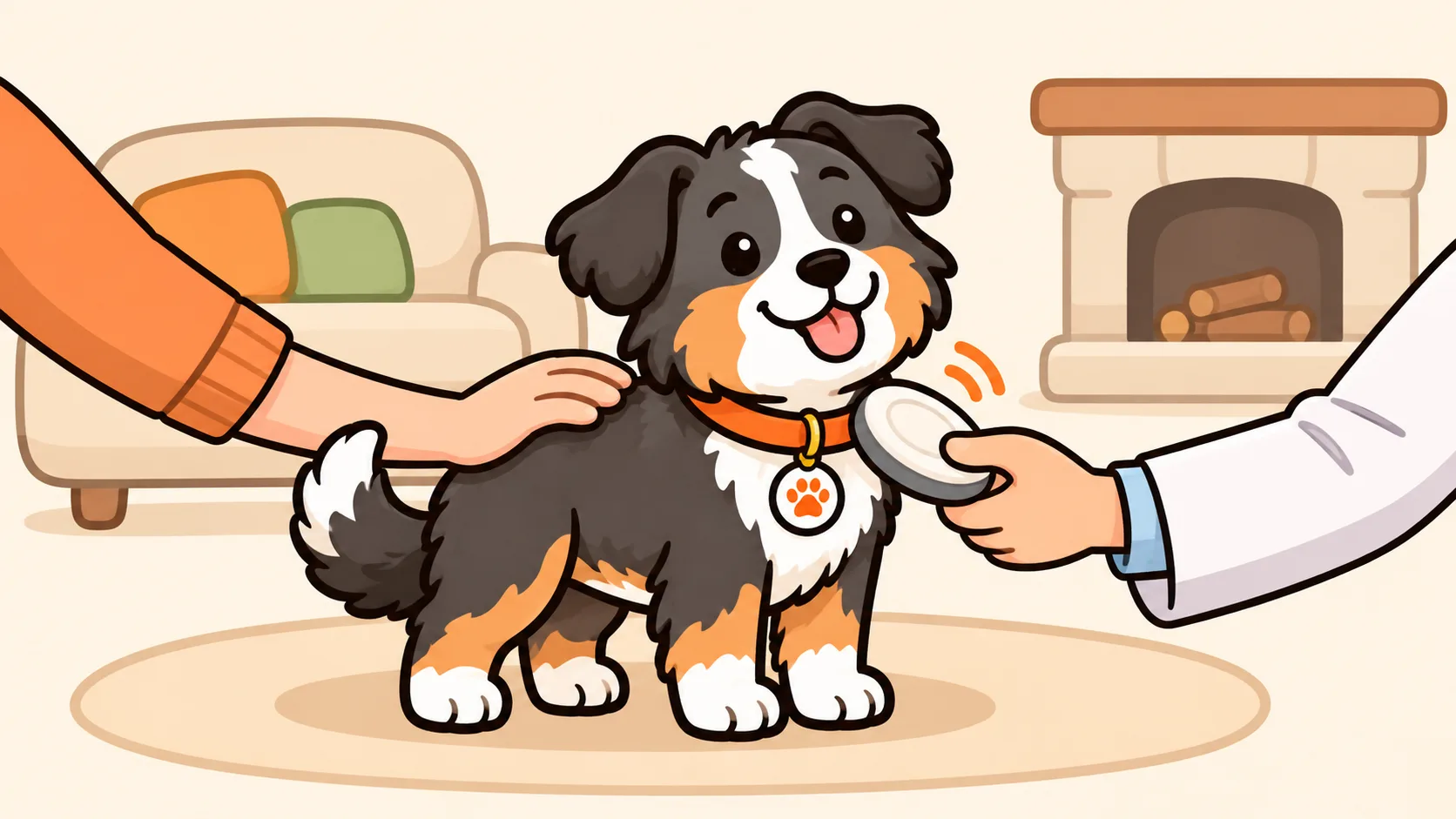
There is no single national price for a puppy’s microchip and vaccinations: the clinic you visit sets the price for both.
There is no single national price for a puppy’s microchip and vaccinations: your clinic sets the price. Ask for an itemized price before the appointment. The bill depends mainly on three things: what the breeder or person giving you the puppy has already done, how many injections remain, and whether the two services are provided in one visit.
Key takeaways
- Identification: required before any sale or transfer. A puppy you buy must therefore already be identified.
- Core vaccines: around 8 weeks, then around 12 weeks, then at 16 weeks or later. A booster between 6 months and 1 year of age.
- Rabies: vaccination is required to bring a dog into France from abroad. The first injection can be given from 12 weeks of age, after identification, and becomes valid only 3 weeks later.
- Budget: ask the clinic for an itemized price and have the microchip and a vaccine given during the same appointment.
What the cost of a puppy’s microchip and vaccinations covers
The bill includes separate services. Ask the clinic to break them down over the phone before making an appointment:
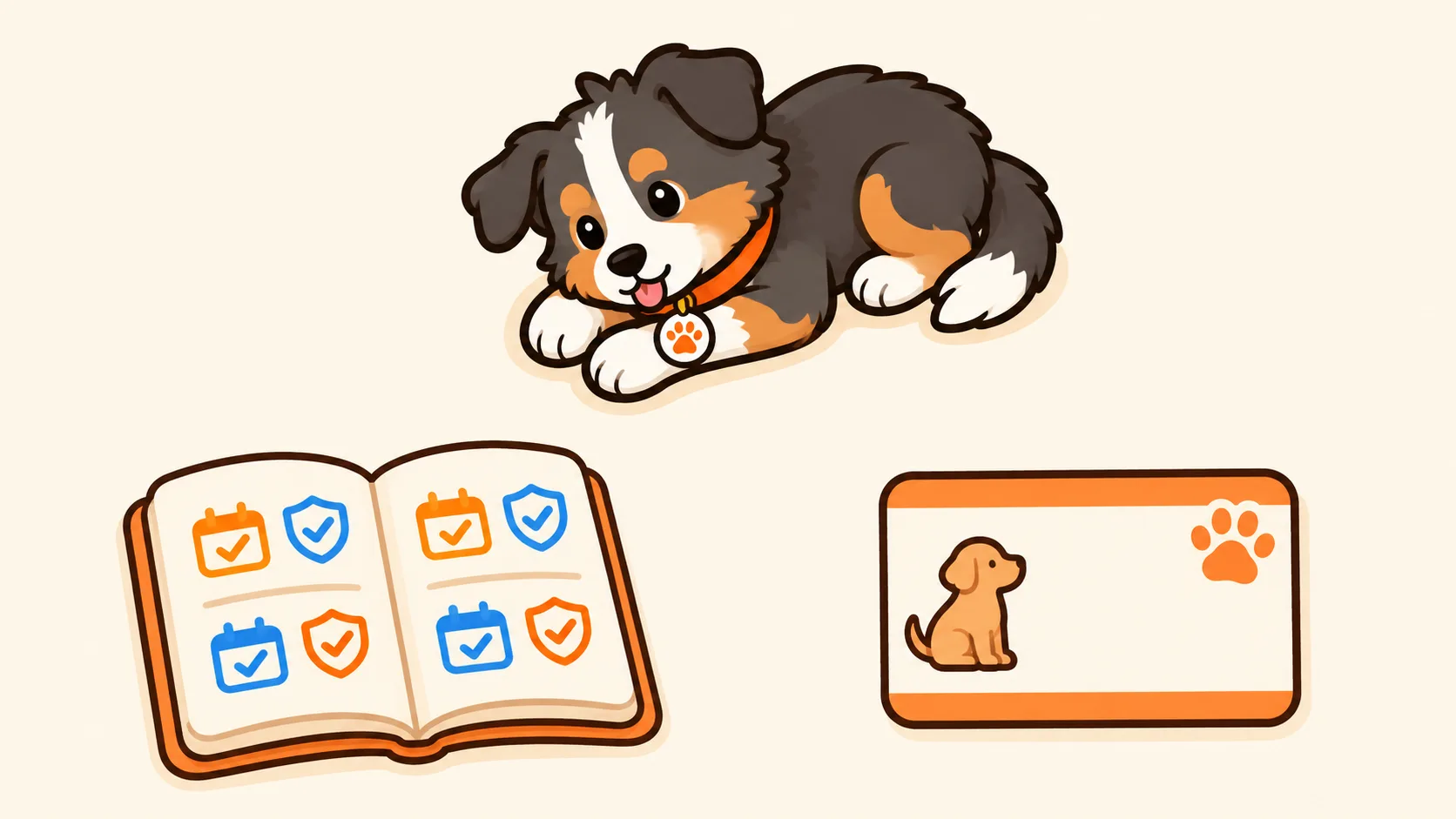
- the appointment, including a physical exam of the puppy (heart, temperature, skin, weight). The veterinarian vaccinates only a healthy puppy;
- the microchip: the device itself, its implantation, and its registration in the national identification database (I-CAD);
- the vaccine: each injection in the series is billed separately;
- the rabies vaccine, only if you plan to travel.
Before working out your budget, check what has already been done. A puppy you buy or adopt is normally already identified: you do not have to pay for its microchip. Open the vaccination record or passport: if it already has a label showing a vaccine given at 8 weeks, only the later injections remain. To reduce the bill, have the microchip implanted on the day of a vaccination: both services take place during the same appointment.
At what age does a puppy’s vaccination schedule begin?
The vaccination schedule begins around 8 weeks. A puppy receives several injections because antibodies passed on by its mother neutralize the vaccine while they remain in its blood. These antibodies disappear at an age that varies from puppy to puppy. The injection given at 16 weeks or later protects the vast majority of puppies; the next booster covers the rare puppies whose maternal antibodies persist longer.
Stages of the vaccination schedule
| Approximate age | Scheduled injection | Useful detail |
|---|---|---|
| Around 8 weeks | 1st injection of core vaccines | Often given by the breeder: check the vaccination record |
| Around 12 weeks | Booster for core vaccines | Age from which a rabies vaccine can be given if travel is planned |
| 16 weeks or later | Last injection in the series | The most important for protection |
| Between 6 months and 1 year of age | Booster for core vaccines | It strengthens immunity. After that, a yearly booster for leptospirosis and, most often, boosters every 3 years for the other core vaccines |
These ages are guides. If the puppy arrives later or an appointment is missed, the veterinarian adjusts the dates. For details based on each situation, see our page on puppy vaccination age.
Diseases targeted by the first vaccines
A combination vaccine protects against several diseases in a single injection: parvovirus, canine infectious hepatitis, and distemper. Parvovirus causes vomiting and bloody diarrhea that can be fatal in puppies. Distemper affects the respiratory tract, intestines, and nervous system. Canine infectious hepatitis attacks the liver. In France, veterinarians often add leptospirosis, a bacterial disease transmitted through rodent urine and contaminated water.
What requirements apply to a puppy’s microchip and vaccinations?
Identification and rabies vaccination are subject to separate requirements, described below. Core vaccines are recommended to protect the puppy, but they are not subject to the same requirement.
Identification before a transfer
In France, a dog must be identified before it is sold or given away. If it arrives at your home without a microchip or tattoo, the transfer does not comply with the rules. A microchip is the most common method, and a tattoo remains a recognized form of identification. The microchip number is linked to the registered keeper’s contact details in the national identification database. When a veterinarian, shelter, or animal control service scans a lost dog’s microchip, they can find its owner. After adoption, check that the change of keeper has been registered in your name. Then report every move or change of phone number: a microchip linked to an old address is useless.
Rabies vaccination
To bring a dog into France from abroad, it must be vaccinated against rabies (vaccination is also mandatory, in particular, for dogs in the 1st and 2nd categories). If you take your puppy on vacation outside France, this vaccine is therefore required for its trip and return. Three conditions apply to the first injection:
- the puppy must be identified before the injection, or the vaccine is not valid;
- it must be at least 12 weeks old;
- the vaccine becomes valid only 3 weeks after the injection.
A puppy therefore cannot travel before about 15 weeks of age. Schedule the vaccination at least one month before departure. When returning from certain countries outside the European Union, a blood test to check rabies antibodies is also required, with a waiting period of several months: find out the requirements well before leaving.
Good to know: a microchip is not a vaccine, and vaccination does not identify a dog. A microchipped puppy is not protected against any disease, and a vaccinated puppy is not necessarily identified.
What happens during microchipping and the first vaccination?
The microchip, about the size of a grain of rice, is implanted under the skin with a needle larger than the one used for a vaccine. In France, it is placed on the left side of the neck. The procedure takes a few seconds, without anesthesia. The veterinarian then scans the microchip to check its number and registers it. You then receive an identification card in your name.
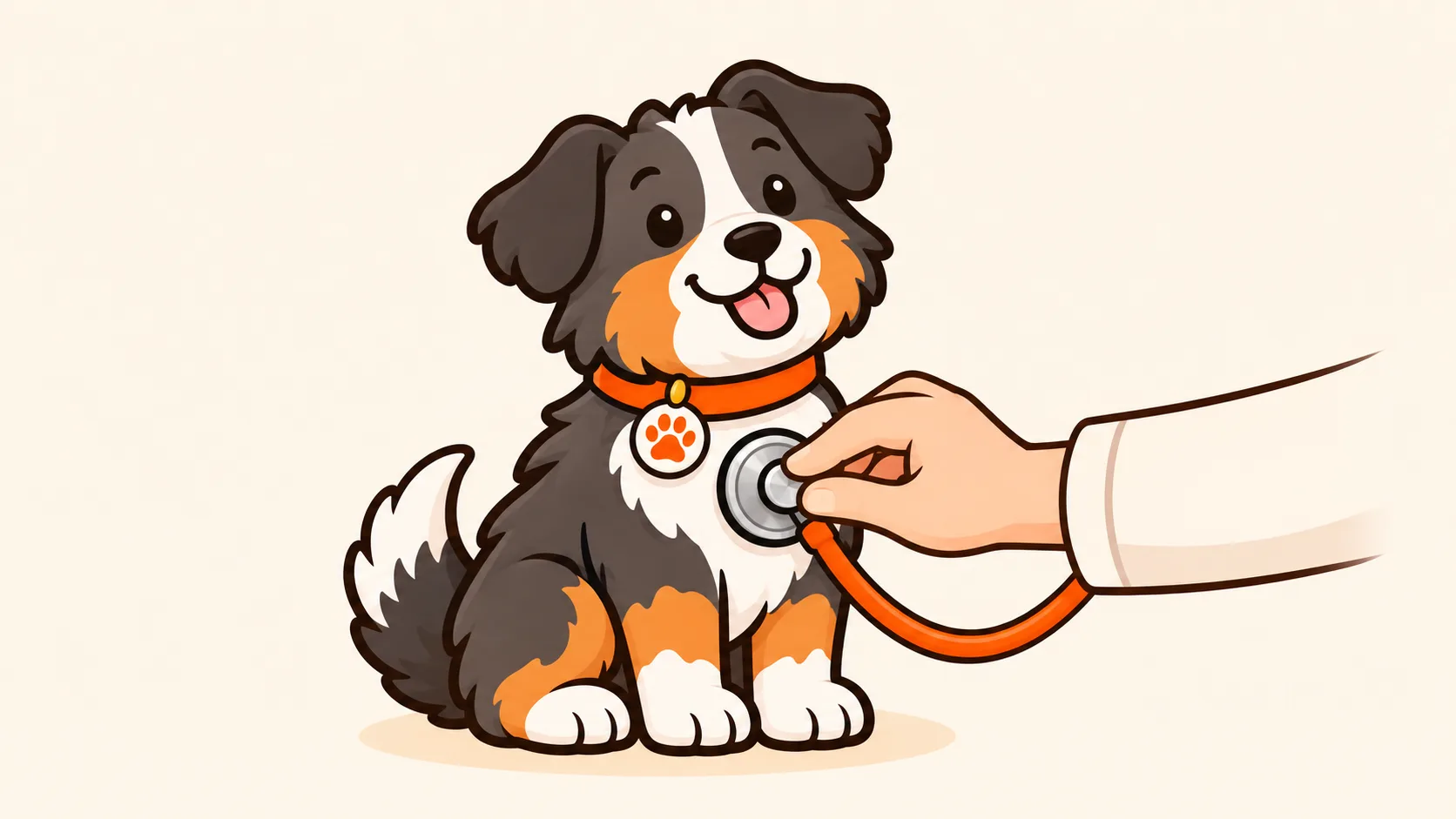
Vaccination is a standard injection under the skin, given after the physical exam. If the two services are combined, they involve two separate injections. In the following days, a small lump at the injection site or a puppy that is a little tired for 24 hours is generally harmless.
Emergency: if your puppy vomits, develops facial swelling, scratches intensely, has trouble breathing, or collapses in the hours after vaccination, call the veterinarian immediately. These signs suggest an allergic reaction. If a lump at the injection site persists for more than 3 weeks, show it to the veterinarian at the next visit.
Plan the first services without mixing up their deadlines
Before and after the puppy arrives:
- Check the identification number and the vaccines recorded in the vaccination record at adoption.
- Call the clinic for an itemized price for the appointment, each vaccine, and the microchip if needed.
- Schedule the remaining injections and the booster according to the schedule above.
- Add a rabies vaccine if a stay abroad is planned, within the time frame given above.
- Update your contact details in the identification database whenever they change.
To keep track of all these dates, record each service and schedule your reminders in one app: .
Frequently asked questions
Yes, with precautions. Until the last injection, walk your puppy in places with few other dogs, avoid unfamiliar dogs or dogs whose vaccination status you do not know, and let it meet healthy, vaccinated dogs you know. Its socialization period also takes place during these weeks and ends around 12 to 14 weeks: keeping it indoors entirely can lead to fear and behavioral problems later.
Yes, slightly. It can shift a few centimeters toward the shoulder without affecting how it works. Ask the veterinarian to scan it during vaccinations or booster visits: this confirms that it still responds and matches the number on the card.
Yes, but it is better to deworm the puppy first. A heavy infestation weakens the puppy and reduces the quality of its response to the vaccine. Give it the dewormer prescribed by the veterinarian a few days before the injection, then follow the deworming schedule appropriate for its age.
Not necessarily. It depends on the vaccine and how much time has passed since the previous injection. Do not delay: make an appointment as soon as you notice the missed booster. The veterinarian will then choose between a single injection and a new series, and adjust the schedule.