When to Deworm a Kitten: Frequency and Treatment
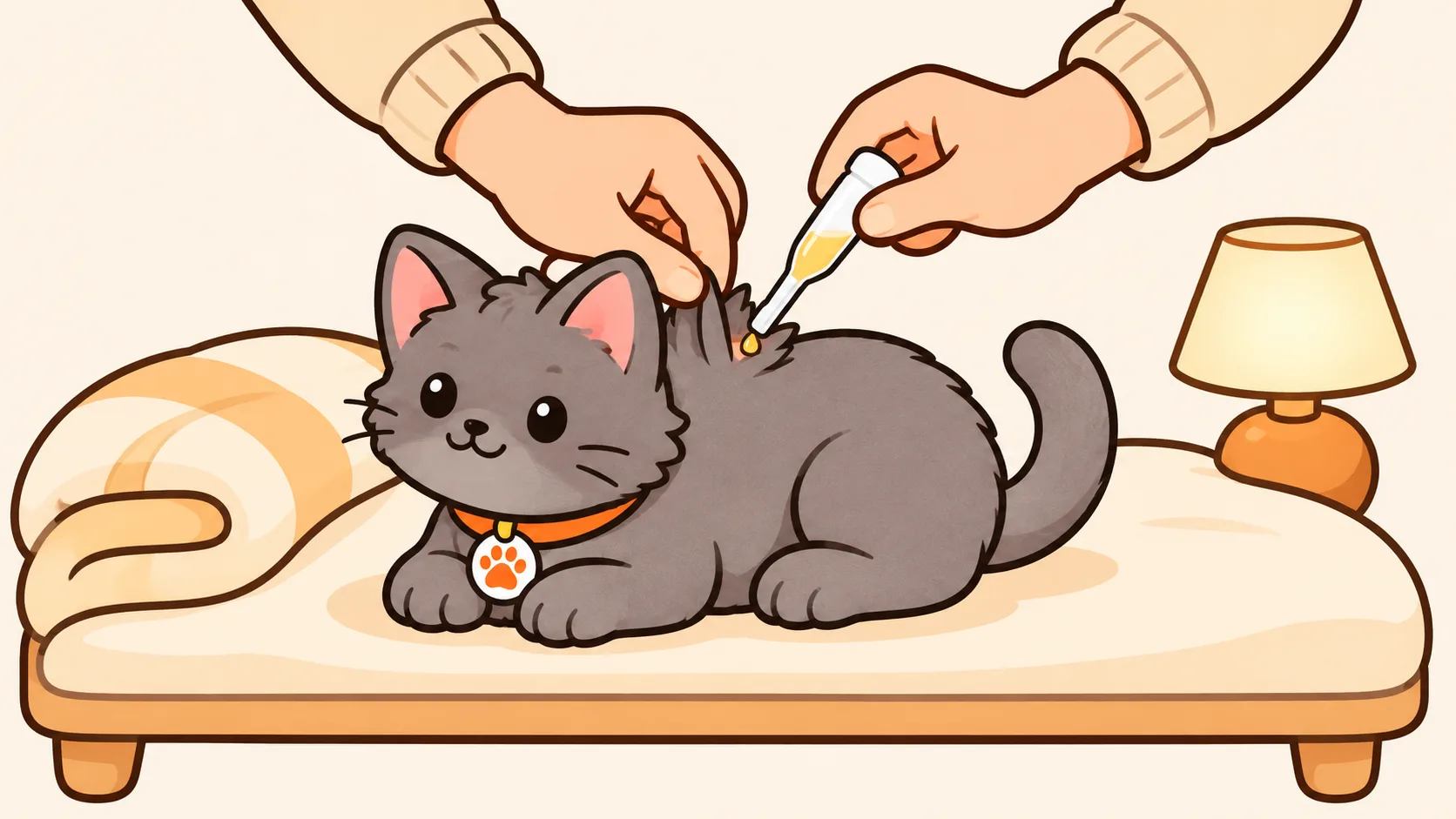
The first two doses come earlier, starting at 2 to 3 weeks and then every two weeks, usually given by the breeder or shelter.
Deworm your kitten from its first weeks of life: at 7 weeks, it should receive its third deworming treatment, followed by treatment every month until 6 months. The first two doses come earlier, starting at 2 to 3 weeks and then every two weeks, usually given by the breeder or shelter. If you adopt a kitten without knowing what it has received, don’t delay: treat it as soon as it arrives and ask the veterinarian for a catch-up schedule. The kitten’s weight and the worms being targeted determine which product to use.
Key takeaways
- 7 weeks: third deworming treatment, then one per month until 6 months.
- After 6 months: 4 deworming treatments a year, more often if the cat hunts or goes outdoors.
- Weigh your kitten before each dose: the dose depends on its weight.
- Treat fleas too, since they transmit tapeworms.
- If vomiting or diarrhea persists, see a veterinarian promptly.
When can you deworm a kitten? The schedule from 7 weeks
Treatments need to be repeated because a dewormer has no preventive effect: it kills worms present on the day of treatment, but not larvae that arrive afterward. In a kitten, those larvae continue to develop for weeks.
Milestones from 7 weeks to six months
| Age | Scheduled treatment | What to know |
|---|---|---|
| 7 weeks | 3rd deworming treatment | It is often given by the breeder or shelter: ask for the date and product name when you adopt the kitten |
| 2 months | Monthly deworming treatment | It generally coincides with the first visit for vaccinations |
| 3 months | Monthly deworming treatment | Check that the product is still suitable for its weight, since it has grown since the last dose |
| 4 months | Monthly deworming treatment | Record the product used to keep a complete history |
| 5 months | Monthly deworming treatment | Stick to the same day of the month so you don’t forget |
| 6 months | Final monthly deworming treatment | From then on, switch to the adult schedule |
The visit in the second month is also when the vaccination schedule begins: our article on when to vaccinate a cat gives the dates for booster shots.
The schedule after six months
In adulthood, the usual frequency is 4 deworming treatments a year. Adjust it to your cat’s lifestyle. An indoor cat that does not hunt can stay on this schedule, or even be treated less often if the veterinarian considers that sufficient. A cat that goes outdoors, hunts rodents, or lives with young children is treated more often, generally every month or every two months, on the veterinarian’s advice.
Read also: How Long Does a Cat Stay in Heat? Duration, Frequency, and Symptoms
Do kittens need to be dewormed if they seem perfectly healthy?
Yes. A kitten can carry intestinal worms without showing any symptoms. So not seeing worms in its stool does not prove it has none.
Worms passed on by the mother
Roundworms are round, several-centimeter-long worms that live in the intestine. An infected mother cat passes the larvae to her kittens through her milk. That is why a kitten that has never been outdoors can be infested from its first feedings. Tapeworms, flatworms made up of segments, are acquired another way: the kitten swallows an infected flea while grooming or, if it hunts, eats a rodent carrying larvae. Deworming without treating fleas therefore allows the problem to return.
Risks to its growth
Worms take some of the nutrients the kitten needs and damage the lining of its intestine. An intestinal worm infestation can compromise a kitten’s growth: it gains less weight, its coat becomes dull, and it is less able to resist infections. If the infestation is severe, a mass of worms can even block the intestine. To tell whether a loss of appetite is unusual, see how many times a day a cat eats.
How do you choose a dewormer suitable for a kitten?
A dewormer is a medication that eliminates an animal’s parasitic worms. It is not a flea treatment: most dewormers do not protect against fleas, except products that clearly combine both actions.

A product suited to the kitten’s age, weight, and target worms
Not all cat dewormers work against the same worms. Some medications target roundworms, while others target flatworms such as tapeworms. For a kitten, choose a combination that covers both. Check three things:
- The stated minimum age and weight: the product information for a milbemycin oxime/praziquantel combination for kittens, published by the ANMV, requires the kitten to be at least 6 weeks old and weigh at least 0.5 kg.
- The dose: it depends on the kitten’s weight and the dosage set by the veterinarian. Weigh the kitten on a kitchen scale that same day.
- The form: tablet, oral paste, or pipette. A pipette is applied to the skin at the back of the neck, where the kitten cannot lick it. This is often the easiest option for a kitten that refuses tablets.
Avoid cutting an adult cat tablet by guesswork, giving a dog product (some dog parasite treatments, particularly those containing permethrin, are toxic to cats), or relying on garlic or “natural dewormers,” which do not eliminate worms.
What signs of worms in a kitten should alert you?
Some signs suggest worms. Others show that the kitten’s condition is worsening and that you should not wait.

Possible digestive signs
An infested kitten may have a swollen, hard belly, vomiting, or diarrhea. Watch for these signs too:
- spaghetti-shaped worms in the stool or vomit (roundworms);
- small white grains, like rice, around the anus or on its bedding (tapeworm segments);
- the kitten dragging its rear end along the floor;
- a dull coat or slower weight gain than its siblings.
If you see one of these signs, deworm the kitten with a suitable product and mention it to the veterinarian at the next visit.
Signs that require prompt veterinary care
Urgent: if your kitten vomits repeatedly, has persistent diarrhea, or has blood in its stool, see a veterinarian that day. A kitten becomes dehydrated and weak much faster than an adult. If a cat has not eaten for more than 48 hours or seems very listless, it needs to see a veterinarian, possibly at home. With a kitten, do not wait that long: if it refuses several meals, seems limp, has pale gums, or has a very swollen belly, call promptly.
Keeping to the deworming schedule
The hardest part is not starting, but remembering each scheduled treatment. Here is what to do:
- On the day of each dose, record the date, the product name, and the kitten’s weight.
- Schedule the next treatment date right away, following the schedule above.
- At 6 months, ask the veterinarian which schedule suits your cat’s lifestyle.
To record each deworming treatment and get a reminder on the day of the next dose, the Papatte app keeps your kitten’s complete health history.
Frequently asked questions
A kitten product that works against both roundworms and tapeworms. At 2 months, preferably choose an oral paste, a small palatable tablet, or a pipette. Check that the minimum weight stated on the package matches your kitten’s weight.
Yes. In France, pharmacies dispense veterinary parasite treatments for cats. Tell the pharmacist your kitten’s exact weight and age, then ask for a product that states it is suitable for kittens. If your kitten is ill or very small, see the veterinarian first.
A kitten always needs it, even without symptoms, because it is often infested by its mother. If you want confirmation, the veterinarian can perform a fecal examination, which means examining the stool under a microscope. It detects worm eggs. A negative result does not replace the treatment schedule, however.
At mealtime or just afterward, if it is a tablet or paste. The kitten takes it more easily and is less likely to vomit it up. Apply a pipette to dry skin at the base of the skull. On the day of treatment, avoid bathing the kitten and keep another animal from licking it.